Quick Facts
Facts sourced from Wikidata (CC0).
Conservation Status
Conservation hubClose to qualifying as threatened in the near future.
The cinereous vulture faces threats from poisoning, habitat loss, and collisions with power lines. Conservation efforts have focused on reducing poisoning incidents and protecting nesting sites, leading to some localized population recoveries. Responsible safari tourism helps by funding conservation projects and raising awareness, while also providing economic incentives for local communities to protect wildlife and their habitats.
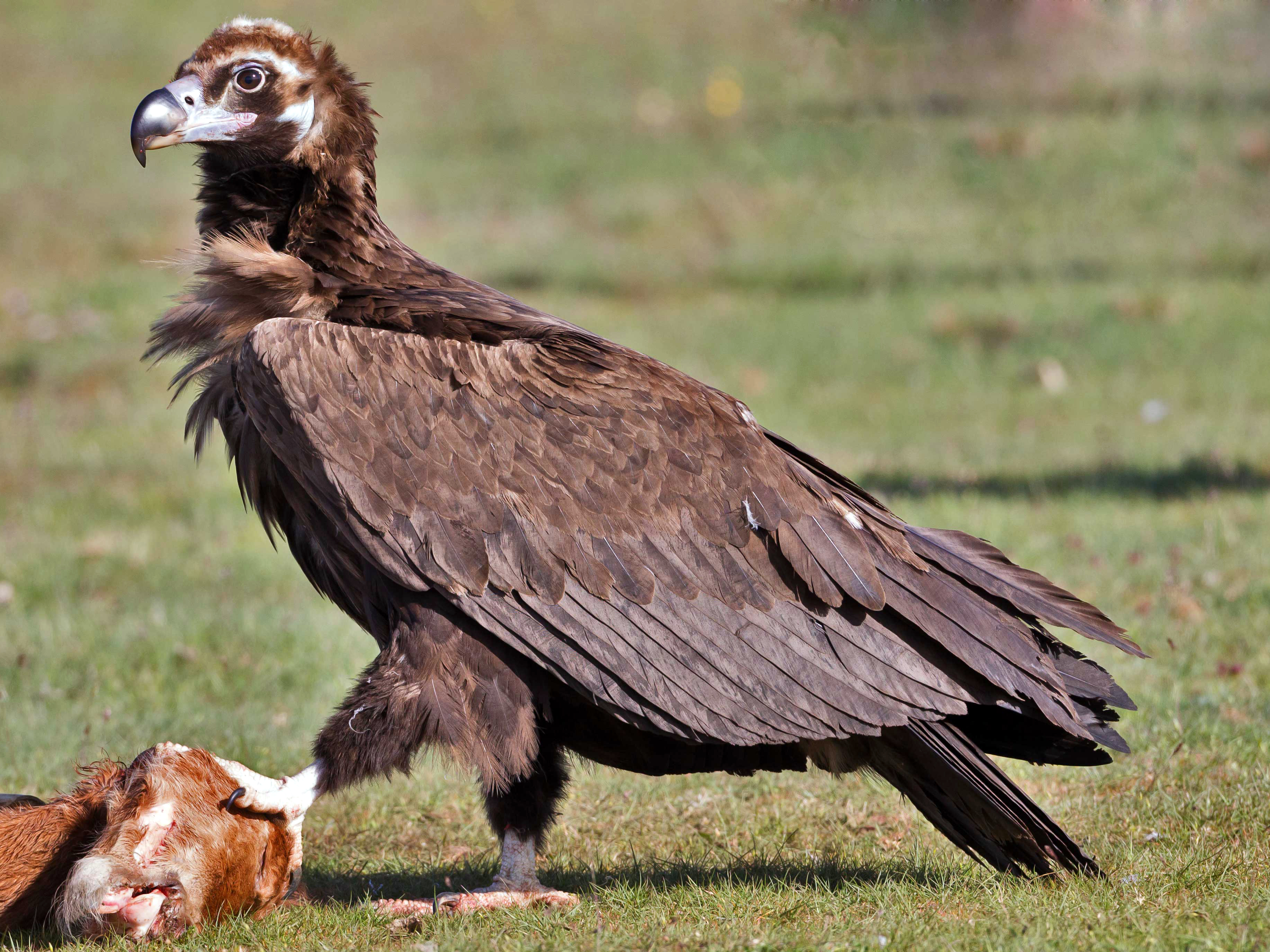
The cinereous vulture, also known as the black vulture, Eurasian black vulture, and monk vulture, is a very large raptor in the family Accipitridae distributed through much of temperate Eurasia. With a body length of 1.2 m, 3.1 m (10 ft) across the wings and a maximum weight of 14 kg (31 lb), it is the largest Old World vulture and largest member of the family Accipitridae.
Description adapted from Wikipedia, CC BY-SA 4.0.
Where to Find
Top parks for Cinereous Vulture. Sightings recorded in 13 safari areas total.
Best Safari Destinations
Loading safari destinations...
Ready to see Cinereous Vulture in the wild?
Use our tools to find the right park and plan your trip.