Quick Facts
Facts sourced from Wikidata (CC0).
Best Months to Spot
Most sightings recorded in Feb. Data from GBIF - a global database of verified wildlife observations by researchers and citizen scientists.
Conservation Status
Conservation hubFaces a high risk of extinction in the wild.
Fishing cats face significant threats from habitat loss due to wetland destruction and pollution, as well as hunting for their meat and skins. While specific large-scale recovery programs are limited, community-based initiatives and protected area management are crucial for their survival. Responsible safari tourism can help by raising awareness, funding conservation efforts through park fees, and providing economic incentives for local communities to protect the habitats these cats rely on.
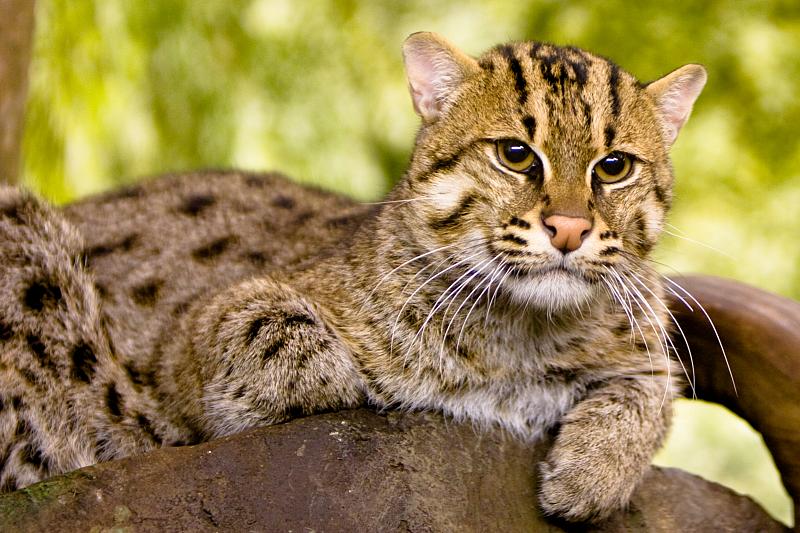
The fishing cat is a medium-sized wild cat of South and Southeast Asia. It has a deep yellowish-grey fur with black lines and spots. Adults have a head-to-body length of 57 to 78 cm, with a 20 to 30 cm long tail. Males are larger than females, weighing 8 to 17 kg, while females average 5 to 9 kg. It lives mostly in the vicinity of wetlands, along rivers, streams, oxbow lakes, in swamps and mangroves where it preys mostly on fish. Other prey items include birds, insects, small rodents, molluscs, reptiles including snakes, amphibians and carrion of cattle. The fishing cat is thought to be primarily nocturnal. It is a good swimmer and can swim long distances, even underwater.
Description adapted from Wikipedia, CC BY-SA 4.0.
Where to Find
Top parks for Fishing Cat. Sightings recorded in 20 safari areas total.
Best Safari Destinations
Loading safari destinations...
Ready to see Fishing Cat in the wild?
Use our tools to find the right park and plan your trip.