Quick Facts
Facts sourced from Wikidata (CC0).
Best Months to Spot
Most sightings recorded in Nov. Data from GBIF - a global database of verified wildlife observations by researchers and citizen scientists.
Conservation Status
Conservation hubFaces a very high risk of extinction in the wild.
Grévy's zebras face threats from habitat loss and competition for water and grazing with livestock. Conservation efforts have focused on community-based conservation programs and anti-poaching patrols. Responsible tourism provides vital funding for these initiatives and raises awareness, helping to protect this endangered species.
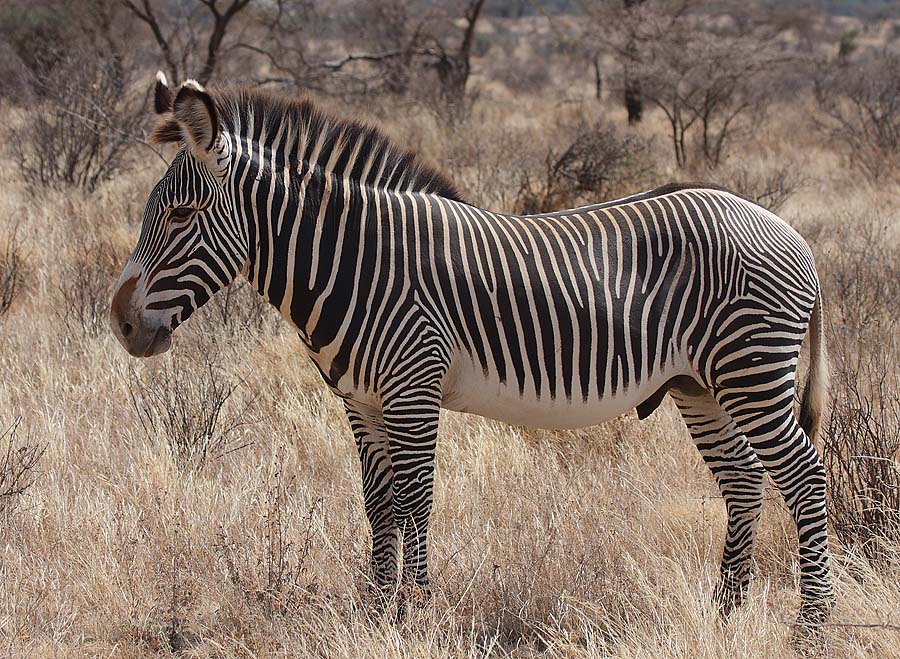
Grévy's zebra, also known commonly as the imperial zebra, is the largest living species of wild equid and the most threatened of the three species of zebras, the other two being the plains zebra and the mountain zebra. Named after French president Jules Grévy, it is found in parts of Kenya and Ethiopia. Superficially, Grévy's zebra's physical features can help to identify it from the other zebra species; its overall appearance is slightly closer to that of a mule and donkey, compared to the more "equine" (horse) appearance of the plains and mountain zebras. Compared to other zebra species, Grévy's zebra is the tallest; it has mule-like, larger ears, and has the tightest stripes of all zebras. It has a distinctively erect mane, and a more slender snout.
Description adapted from Wikipedia, CC BY-SA 4.0.
Where to Find
Top parks for Grévy's Zebra. Sightings recorded in 18 safari areas total.
Best Safari Destinations
Loading safari destinations...
Ready to see Grévy's Zebra in the wild?
Use our tools to find the right park and plan your trip.