Best Months to Spot
Most sightings recorded in Jul. Data from GBIF - a global database of verified wildlife observations by researchers and citizen scientists.
Conservation Status
Conservation hubFaces a high risk of extinction in the wild.
Mandrills are threatened by habitat loss due to deforestation for logging and agriculture, and by hunting for bushmeat. While specific large-scale recovery programs are limited, conservation efforts focus on protecting their forest habitats through national parks and reserves. Responsible safari tourism helps by providing economic incentives for local communities to protect wildlife and their environments, and by raising awareness about the importance of mandrill conservation.
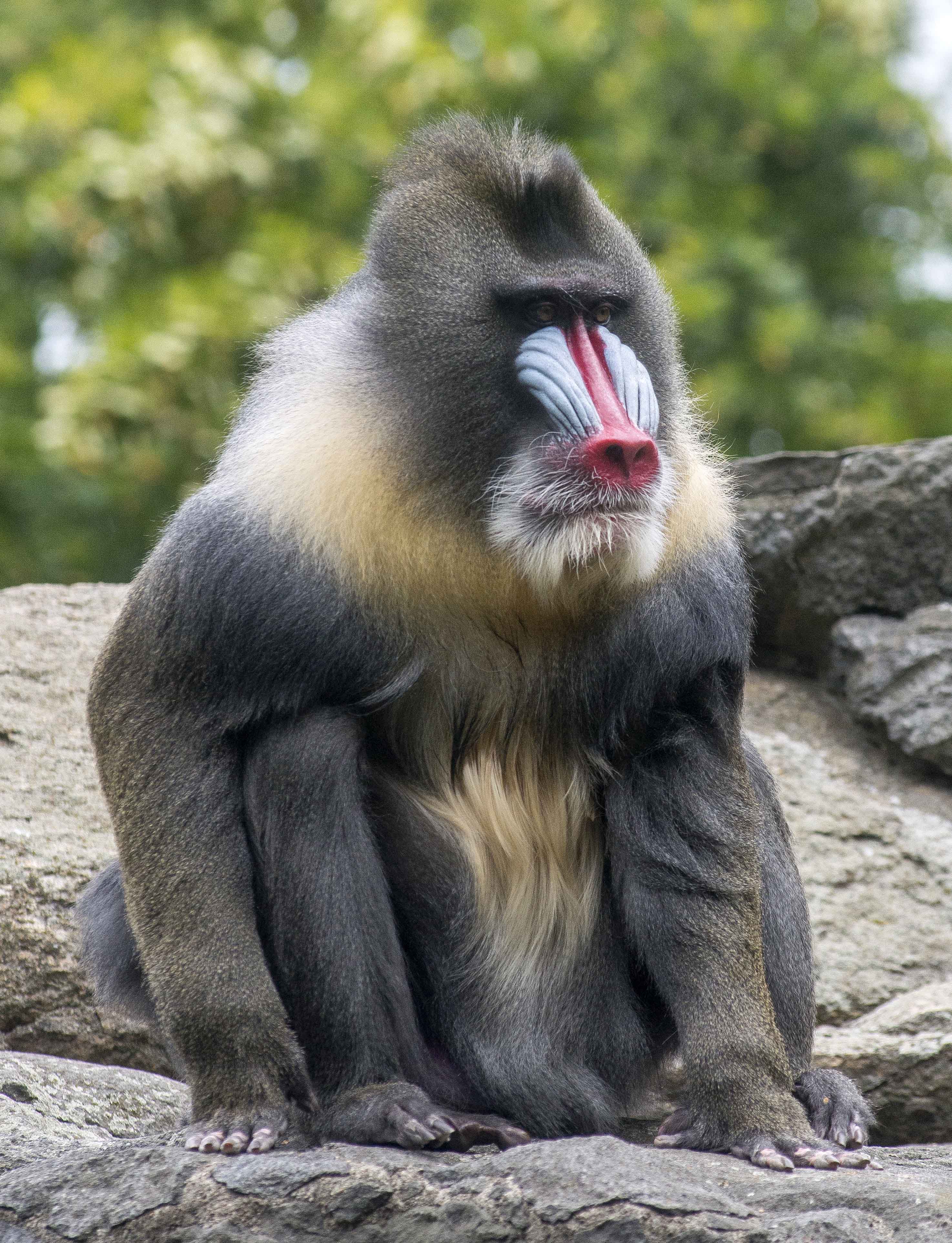
The mandrill is a large Old World monkey native to west central Africa. It is one of the most colorful mammals in the world, with red and blue skin on its face and posterior. The species is sexually dimorphic, as males have a larger body, longer canine teeth and brighter coloring. Its closest living relative is the drill, with which it shares the genus Mandrillus. Both species were traditionally thought to be baboons, but further evidence has shown that they are more closely related to white-eyelid mangabeys.
Description adapted from Wikipedia, CC BY-SA 4.0.
Where to Find
Top parks for Mandrill. Sightings recorded in 4 safari areas total.
Best Safari Destinations
Loading safari destinations...
Ready to see Mandrill in the wild?
Use our tools to find the right park and plan your trip.