Quick Facts
Facts sourced from Wikidata (CC0).
Best Months to Spot
Most sightings recorded in Jul. Data from GBIF - a global database of verified wildlife observations by researchers and citizen scientists.
Conservation Status
Conservation hubFaces a high risk of extinction in the wild.
The shoebill faces threats from habitat loss due to agriculture and human development, as well as poaching for the illegal pet trade. While specific large-scale recovery programs are limited, efforts focus on protecting key wetland habitats where they breed and forage. Responsible tourism, by providing economic incentives for local communities to conserve these areas and by funding anti-poaching patrols, plays a crucial role in safeguarding the shoebill's future.
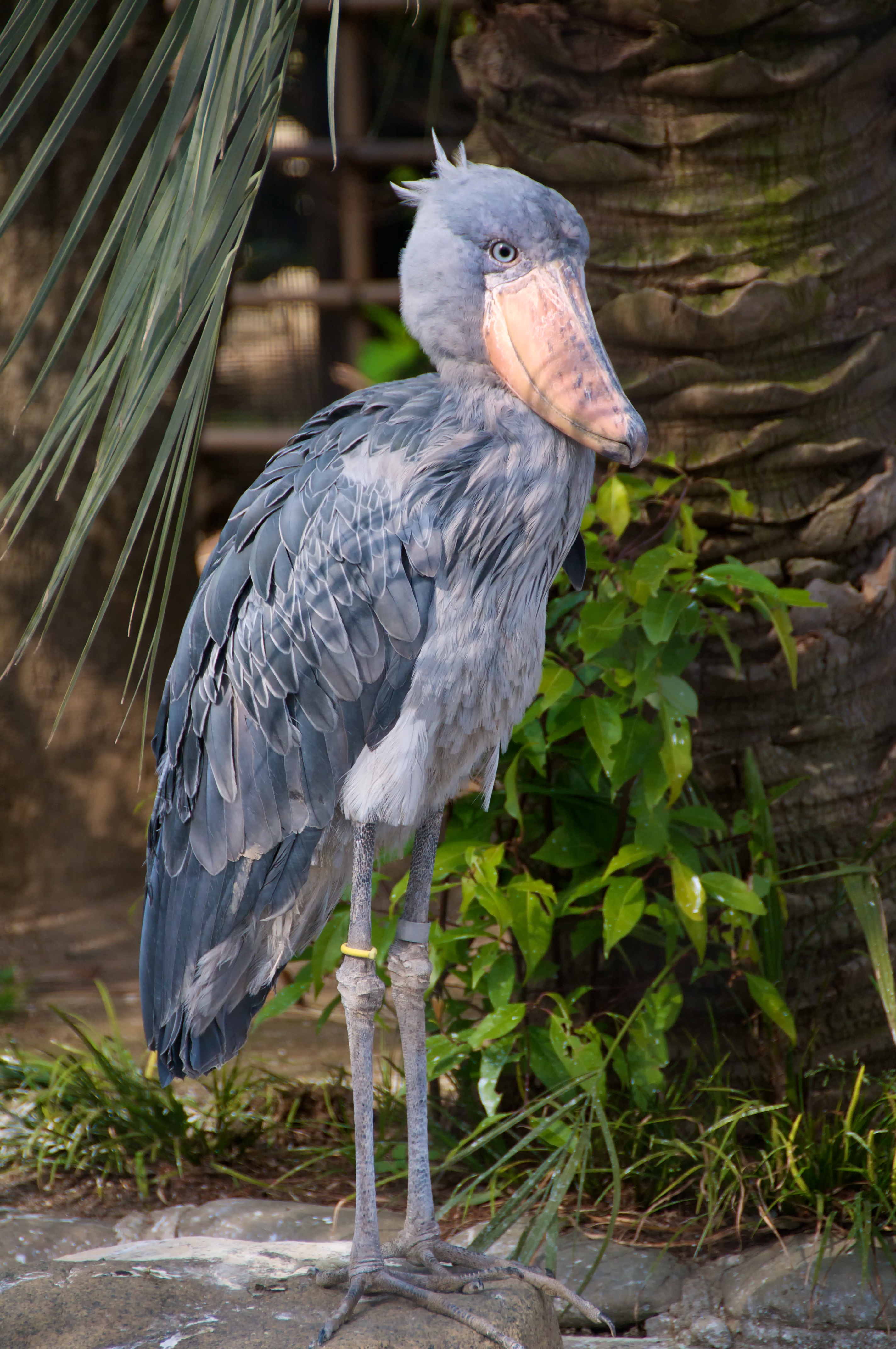
The shoebill, also known as the whale-headed stork, whalebill, and shoe-billed stork, is a large long-legged wading bird. It is named for its enormous, shoe-shaped bill. It has a somewhat stork-like overall form and was previously classified as a stork in the order Ciconiiformes, but genetic evidence has now placed it along with pelicans, herons, and its closest relative, the hamerkop, all in the order Pelecaniformes. Adults are mainly grey, while juveniles are browner. It lives in tropical East Africa in large swamps from South Sudan down to Zambia.
Description adapted from Wikipedia, CC BY-SA 4.0.
Where to Find
Top parks for Shoebill. Sightings recorded in 38 safari areas total.
Best Safari Destinations
Loading safari destinations...
Ready to see Shoebill in the wild?
Use our tools to find the right park and plan your trip.