Quick Facts
Facts sourced from Wikidata (CC0).
Best Months to Spot
Most sightings recorded in Jan. Data from GBIF - a global database of verified wildlife observations by researchers and citizen scientists.
Conservation Status
Conservation hubFaces an extremely high risk of extinction in the wild.
The Sumatran rhinoceros faces severe threats from poaching for its horn and habitat loss due to deforestation. While dedicated conservation efforts are underway, including intensive protection and breeding programs, the species remains critically endangered. Responsible safari tourism can help by raising awareness, supporting local economies that rely on conservation, and providing funding for anti-poaching patrols and habitat preservation.
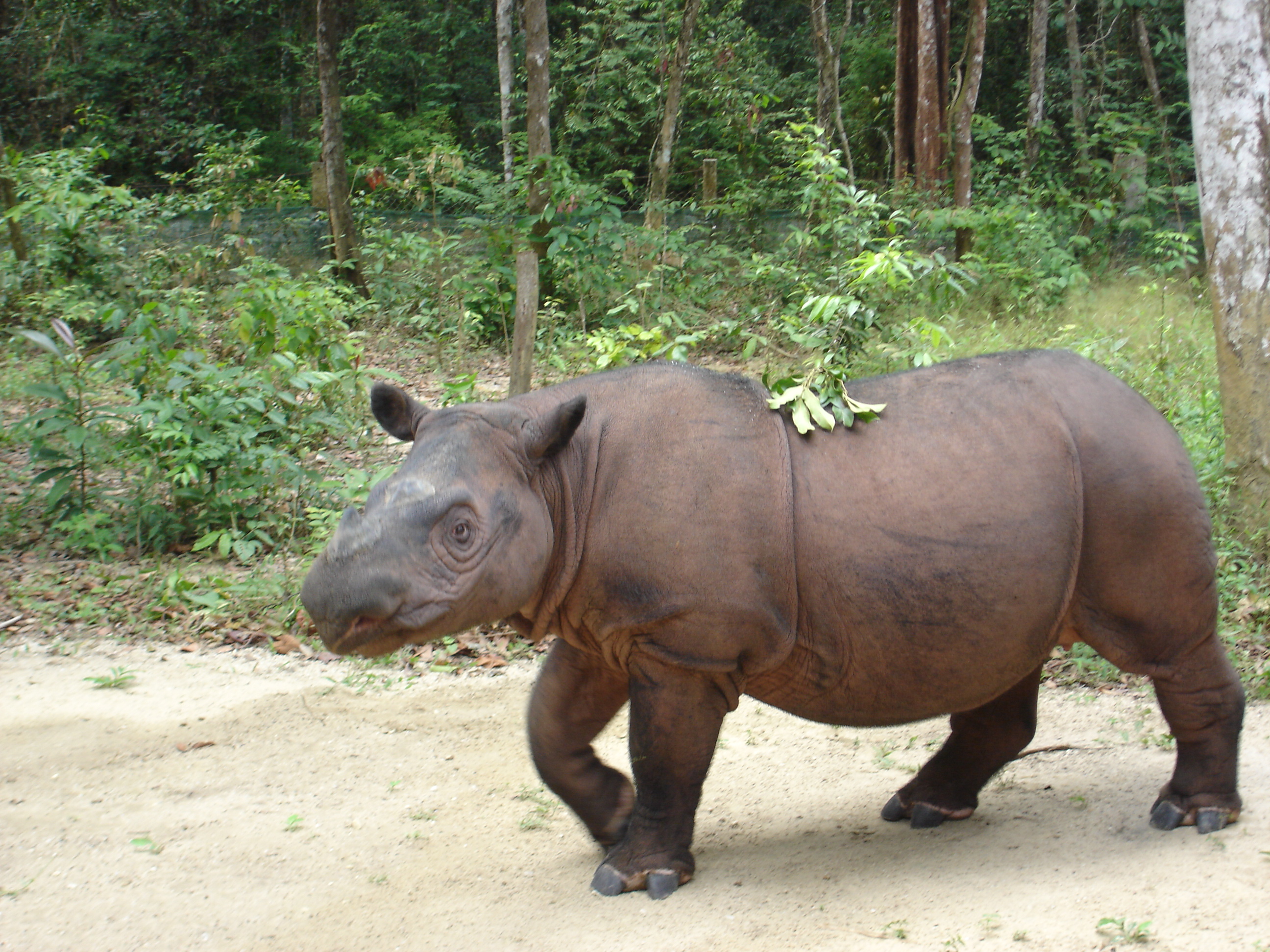
The Sumatran rhinoceros, also known as the Sumatran rhino, hairy rhinoceros or Asian two-horned rhinoceros, is a rare member of the family Rhinocerotidae and one of five extant species of rhinoceros; it is the only extant species of the genus Dicerorhinus. It is the smallest rhinoceros, although it is still a large mammal; it stands 112–145 cm (44–57 in) high at the shoulder, with a head-and-body length of 2.36–3.18 m and a tail of 35–70 cm (14–28 in). The weight is reported to range from 500–1,000 kg (1,100–2,200 lb), averaging 700–800 kg (1,540–1,760 lb). Like both African species, it has two horns; the larger is the nasal horn, typically 15–25 cm (5.9–9.8 in), while the other horn is typically a stub. A coat of reddish-brown hair covers most of the Sumatran rhino's body.
Description adapted from Wikipedia, CC BY-SA 4.0.
Where to Find
Top parks for Sumatran Rhinoceros. Sightings recorded in 3 safari areas total.
Best Safari Destinations
Loading safari destinations...
Ready to see Sumatran Rhinoceros in the wild?
Use our tools to find the right park and plan your trip.