Quick Facts
Facts sourced from Wikidata (CC0).
Best Months to Spot
Most sightings recorded in Jan, Nov, Dec. Data from GBIF - a global database of verified wildlife observations by researchers and citizen scientists.
Conservation Status
Conservation hubFaces a high risk of extinction in the wild.
Sun bears face significant threats from habitat loss due to deforestation for agriculture and logging, as well as poaching for their body parts and the illegal pet trade. While specific large-scale recovery programs are limited, conservation efforts focus on anti-poaching patrols and habitat protection. Responsible safari tourism can help by raising awareness, supporting local communities who are crucial for conservation, and providing an economic incentive to protect the forests where sun bears live.
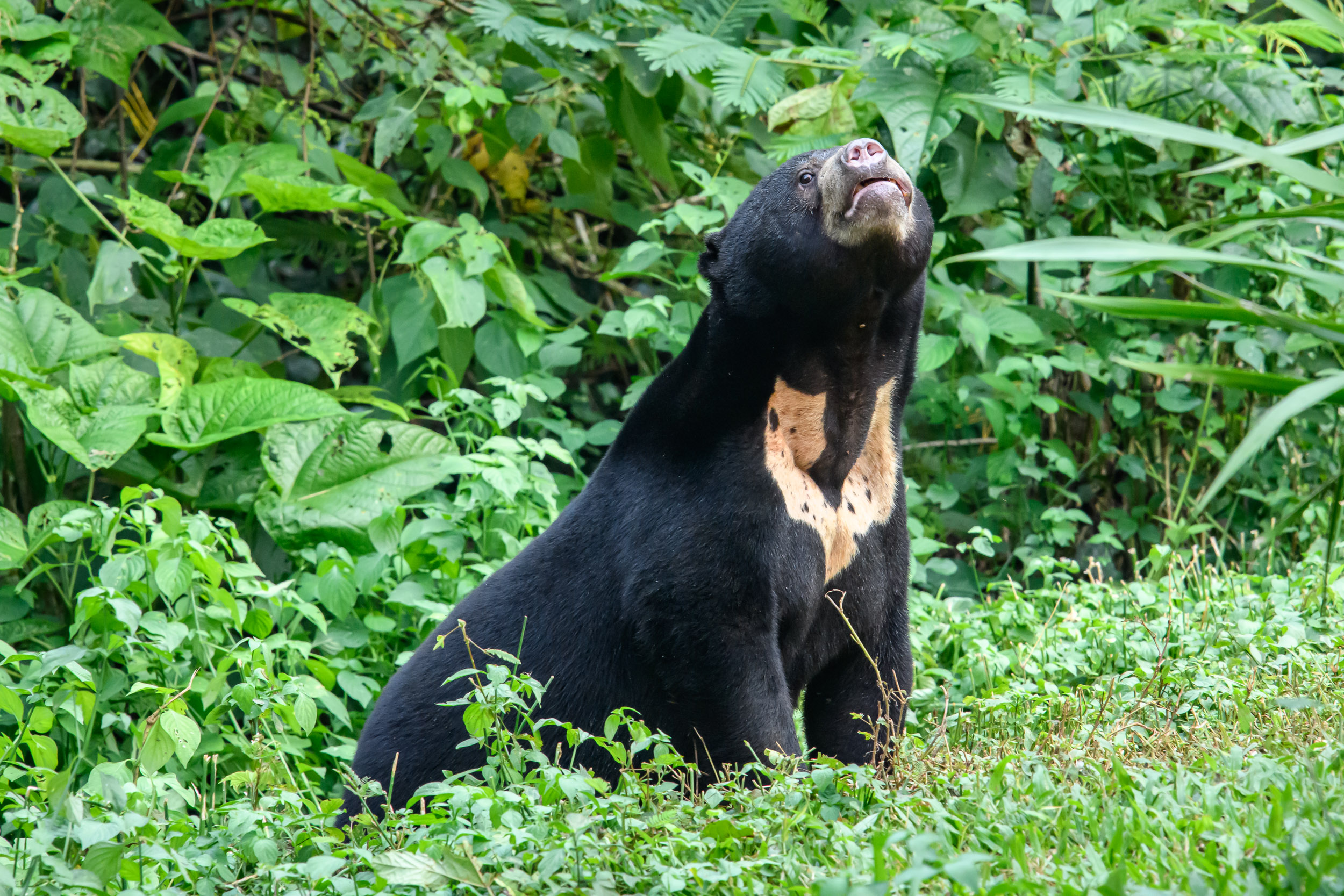
The sun bear is a bear species in the family Ursidae found in the tropical forests of Southeast Asia. It is the only species in the genus Helarctos and the smallest bear species, standing nearly 70 cm (28 in) at the shoulder and weighing 25–65 kg (55–143 lb). It is stockily built, with large paws, strongly curved claws, small, rounded ears and a short snout. The fur is generally short and jet black, but can vary from grey to red. The sun bear gets its name from its characteristic orange to cream-coloured chest patch.
Description adapted from Wikipedia, CC BY-SA 4.0.
Where to Find
Top parks for Sun Bear. Sightings recorded in 33 safari areas total.
Best Safari Destinations
Loading safari destinations...
Ready to see Sun Bear in the wild?
Use our tools to find the right park and plan your trip.