Quick Facts
Facts sourced from Wikidata (CC0).
Best Months to Spot
Most sightings recorded in Jan, Aug, Sep, Oct. Data from GBIF - a global database of verified wildlife observations by researchers and citizen scientists.
Conservation Status
Conservation hubFaces a very high risk of extinction in the wild.
Whale sharks face threats from fishing, bycatch, and habitat degradation. While conservation efforts are underway, including marine protected areas and research programs, their populations continue to decline. Responsible tourism, by providing economic incentives for conservation and raising awareness, plays a vital role in protecting these magnificent creatures.
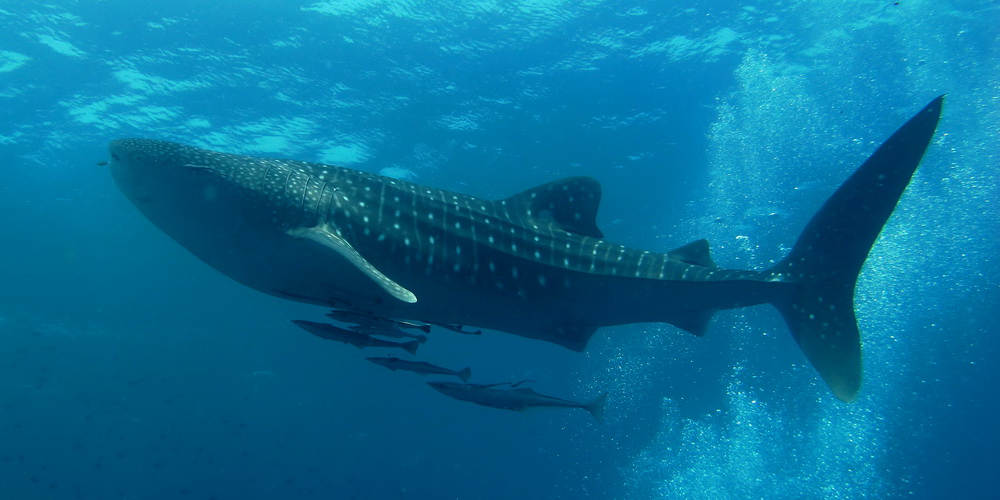
The whale shark is a slow-moving, filter-feeding carpet shark and the largest known extant fish species. An individual with a length of 18.8 m (61.7 ft) has been considered the largest reliably recorded. The whale shark holds many records for size in the animal kingdom, most notably being by far the largest living non-cetacean animal. It is the only living species of the genus Rhincodon and the only extant member of the family Rhincodontidae, which belongs to the subclass Elasmobranchii in the class Chondrichthyes. Before 1984, it was classified as Rhiniodon into Rhinodontidae. An extinct species, Rhincodon ferriolensis, was described in Europe, in the Late Burdigalian stage.
Description adapted from Wikipedia, CC BY-SA 4.0.
Where to Find
Top parks for Whale Shark. Sightings recorded in 18 safari areas total.
Best Safari Destinations
Loading safari destinations...
Ready to see Whale Shark in the wild?
Use our tools to find the right park and plan your trip.